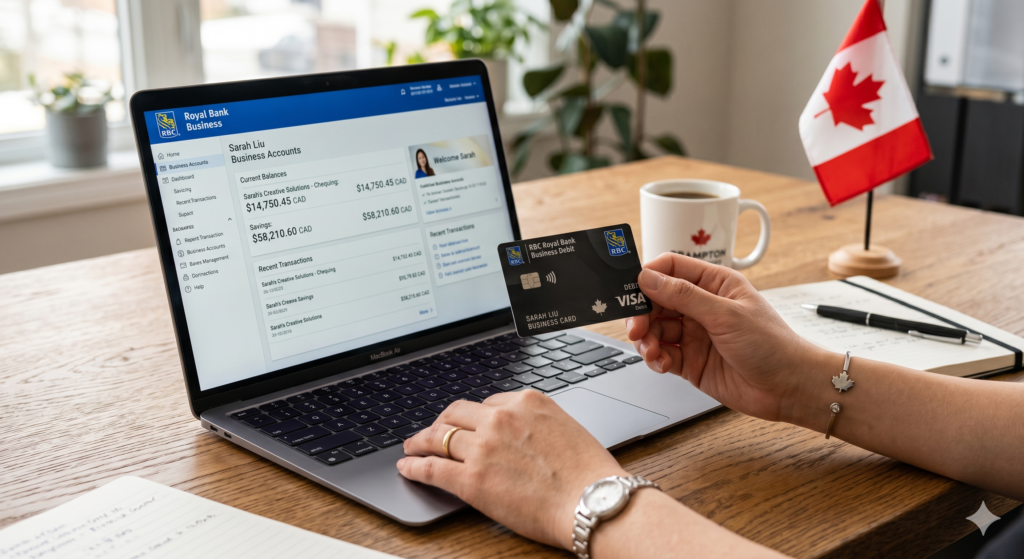
If you’re freelancing in Canada, keeping your personal and business finances separate is one of the smartest moves you can make. A dedicated business bank account makes tax time easier, looks more professional to clients, and helps you track exactly how much your freelance business is actually earning.
This guide covers everything you need to know about opening a business bank account in Canada as a freelancer or self-employed professional in 2026.
Do You Actually Need a Business Bank Account as a Freelancer?
Technically, no — there’s no legal requirement for sole proprietors in Canada to have a separate business account. But practically, yes — you absolutely should.
Here’s why:
Tax preparation becomes much easier. When your business income and personal spending are mixed in one account, separating them at tax time is a nightmare. A dedicated business account means your income and expenses are already organized.
It looks more professional. Clients paying via e-transfer or cheque will see your business name instead of your personal name — which builds trust and credibility.
It protects you during a CRA audit. If the Canada Revenue Agency ever audits your business, having clean separated records is essential. Mixed personal and business transactions raise red flags.
It helps you understand your cash flow. Knowing exactly what’s coming in and going out of your business helps you make better decisions about pricing, spending, and saving for taxes.
Types of Business Bank Accounts in Canada
Before choosing an account, understand the two main categories:
Personal accounts used for business — Some sole proprietors use a second personal chequing account for business. This is allowed and costs less, but it doesn’t give you a business account number or business name on transactions.
True business chequing accounts — These are accounts opened in your business name. They typically have monthly fees but offer features like business debit cards, higher transaction limits, and integration with accounting software.
For most freelancers just starting out, a second personal account or a no-fee business account works perfectly fine.
Best Business Bank Accounts for Canadian Freelancers in 2026
1. RBC Digital Choice Business Account
- Monthly fee: $6
- Transactions: Unlimited electronic transactions
- Best for: Freelancers who do most banking digitally
- Interac e-Transfer: Included
2. TD Basic Business Plan
- Monthly fee: $5
- Transactions: 5 free transactions per month
- Best for: Freelancers with low transaction volume
- Interac e-Transfer: Included
3. Scotiabank Right Size Account for Business
- Monthly fee: $6.95
- Transactions: Pay per use model
- Best for: Freelancers who want flexibility
- Interac e-Transfer: Included
4. BMO Business Builder 1
- Monthly fee: $6
- Transactions: 35 transactions per month
- Best for: Freelancers with moderate activity
- Interac e-Transfer: Included
5. Tangerine Business Savings Account
- Monthly fee: $0
- Best for: Freelancers who want no fees and don’t need a chequing account
- Note: Savings account only, not a full chequing account
6. Wealthsimple Business Account (via Wealthsimple Cash)
- Monthly fee: $0
- Best for: Tech-savvy freelancers who want a modern no-fee option
- Note: Newer option, check current availability in your province
What You Need to Open a Business Bank Account in Canada
Requirements vary slightly by bank but generally you’ll need:
For sole proprietors using your own name:
- Government-issued photo ID (driver’s licence or passport)
- Social Insurance Number (SIN)
- Personal address and contact information
For sole proprietors with a business name (e.g. “John Smith Consulting”):
- Everything above plus
- Business registration certificate from your province
- Master Business Licence (Ontario) or equivalent provincial registration
For incorporated businesses:
- Certificate of Incorporation
- Articles of Incorporation
- Corporate resolution authorizing the account
- ID for all directors
Most freelancers operating as sole proprietors under their own name can open an account with just their ID and SIN — no business registration required.
How to Register Your Business Name in Ontario
If you want to operate under a business name in Ontario (for example “Maple Leaf Marketing” instead of your personal name), you need to register it with the province.
Steps:
- Search the Ontario Business Registry (OBR) at ontario.ca/businessregistry to make sure your name is available
- Register your business name online — costs $60 for a sole proprietorship
- You’ll receive a Master Business Licence within a few days
- Take this to your bank to open a business account in your business name
Other provinces have similar processes — search “[your province] business name registration” for the specific steps and fees.
Step-by-Step: Opening Your Business Bank Account
Step 1 — Choose your bank
Compare monthly fees, transaction limits, and e-Transfer options. For most freelancers, the lowest fee option that includes unlimited e-Transfers is the best choice.
Step 2 — Gather your documents
At minimum: government photo ID and SIN. If operating under a business name, bring your business registration.
Step 3 — Apply online or in branch
Most major Canadian banks let you open a business account online in under 20 minutes. Some require an in-branch appointment for business accounts — check your bank’s website first.
Step 4 — Set up Interac e-Transfer
Most Canadian freelancers get paid via e-Transfer. Set up your business email address for incoming transfers so clients can pay you directly.
Step 5 — Connect to accounting software
Link your business account to Wave (free) or QuickBooks to automatically import transactions. This makes tracking income and expenses almost effortless.
Step 6 — Set up a tax savings system
Every time a payment comes in, immediately transfer 25–30% to a separate savings account. This becomes your tax payment fund so you’re never caught short when CRA comes calling.
How to Get Paid as a Canadian Freelancer
Once your business account is set up, here are the most common ways Canadian freelancers receive payment:
Interac e-Transfer — The most common method for Canadian clients. Fast, free for the sender, and deposits directly into your account. Limit is typically $3,000 per transfer but can be increased with your bank.
Direct deposit / EFT — Some larger clients pay via direct deposit. You’ll need to provide your account number and institution number.
PayPal — Common for international clients. Note that PayPal charges conversion fees when receiving USD — factor this into your pricing.
Stripe — Better than PayPal for recurring clients. Accepts credit cards and has lower fees for Canadian businesses.
Cheque — Still used by some older businesses and government clients. Deposit via mobile app to avoid branch visits.
Invoicing and Your Business Bank Account
A business bank account works best when paired with a proper invoicing system. Every invoice you send should include:
- Your business name and address
- Your client’s name and address
- Invoice number and date
- Itemized list of services with amounts
- Payment due date
- Your GST/HST number (if registered)
- Payment instructions including your e-Transfer email
Use our Free Invoice Generator to create professional invoices with automatic GST and HST calculations. It’s built specifically for Canadian freelancers and takes less than two minutes to generate a complete PDF invoice — no account required.
Common Mistakes Canadian Freelancers Make With Business Banking
Waiting too long to separate finances. The longer you mix personal and business money, the harder it is to untangle. Open a business account as soon as you land your first client.
Not saving for taxes. Self-employed Canadians pay income tax and CPP contributions. Without an employer withholding taxes, it’s entirely your responsibility. Set aside 25–30% of every payment the moment it arrives.
Using personal PayPal for business. Create a separate PayPal business account linked to your business bank account. Mixing them creates accounting headaches.
Not tracking expenses. Every business expense — software, equipment, home office, professional development — is potentially tax deductible. Track everything from day one.
Final Thoughts
Opening a business bank account as a Canadian freelancer is a simple step that pays off significantly at tax time and makes your business look more professional to clients. Most accounts can be opened online in under 20 minutes with just your ID.
Once your banking is set up, the next step is making sure you’re invoicing properly and staying on top of your GST/HST obligations.
Need help invoicing your clients professionally? Try our Free Invoice Generator for Canadian Freelancers — automatic GST/HST calculations, PDF download, no signup required. Also check out our Freelancer’s Guide to GST/HST in Canada for everything you need to know about Canadian tax obligations.